

Can CCWDM be used in smart grid communication networks?
Hey there! As a CCWDM supplier, I've been getting a lot of questions lately about whether CCWDM can be used in smart grid communication networks. So, I thought I'd write this blog to share my thoughts and insights on the topic.
First off, let's talk a bit about what CCWDM is. CCWDM stands for Coarse Coarse Wavelength Division Multiplexing. It's a technology that allows multiple optical signals of different wavelengths to be transmitted over a single optical fiber. This is super useful because it can significantly increase the capacity of a fiber optic network without having to lay new cables.
Now, let's dive into the smart grid. A smart grid is an advanced electricity network that uses digital technology to monitor and manage the production, distribution, and consumption of electricity. It's all about making the power grid more efficient, reliable, and sustainable. Communication is a key part of the smart grid, as it enables real - time data transfer between various components such as power generation plants, substations, and end - users.
So, can CCWDM be used in smart grid communication networks? The answer is a big yes, and here's why.
Advantages of CCWDM in Smart Grid Communication
1. Cost - effectiveness
One of the main advantages of CCWDM is its cost - effectiveness. In a smart grid, there are a large number of communication nodes, including sensors, meters, and control devices. Installing separate fibers for each communication link would be extremely expensive. CCWDM allows multiple signals to share a single fiber, reducing the need for a large number of fibers. This not only cuts down on the cost of fiber optic cables but also reduces installation and maintenance costs. For example, instead of running 10 separate fibers for 10 different data streams, you can use a single fiber with a CCWDM system to transmit all those data streams.
2. Scalability
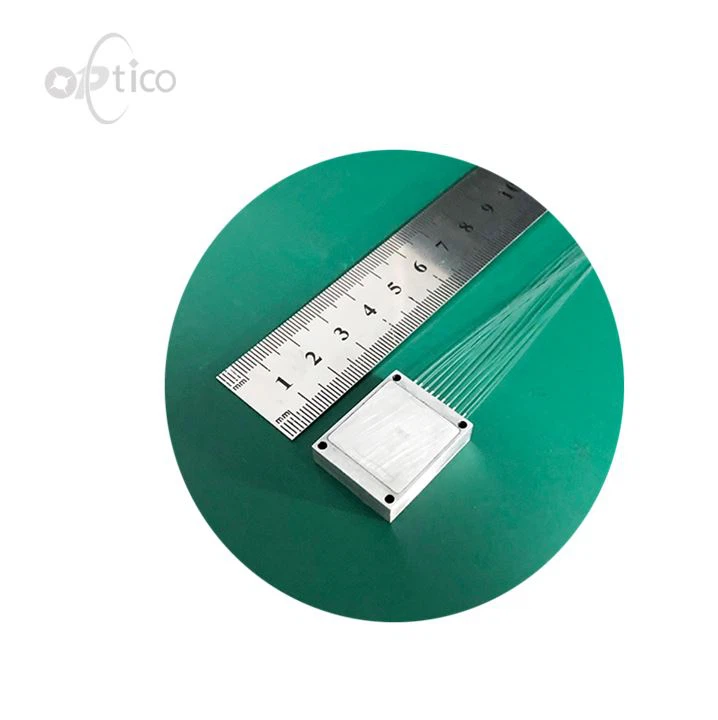
Smart grids are constantly evolving, with new devices and applications being added all the time. CCWDM offers great scalability. You can easily add more wavelengths to the existing system as the network grows. For instance, if you start with a 4CH CCWDM Module and later need to increase the capacity, you can upgrade to an 8+1CH Compact CWDM or even an 18CH Ultra Compact CWDM Module. This flexibility makes CCWDM a great choice for the dynamic nature of smart grid communication networks.
3. Reliability
Reliability is crucial in a smart grid. Any disruption in communication can lead to power outages or other serious issues. CCWDM systems are known for their high reliability. They use well - established optical components and technologies, which have been tested and proven in various applications. Also, in case of a fiber break, CCWDM can be integrated with protection mechanisms such as automatic switch - over to a backup fiber, ensuring continuous communication.
4. Compatibility
CCWDM is compatible with a wide range of existing communication equipment and protocols used in the smart grid. Whether it's Ethernet, SDH, or other data transmission standards, CCWDM can be easily integrated into the existing network infrastructure. This means that power companies can upgrade their communication networks to use CCWDM without having to replace all their existing equipment, saving both time and money.
Challenges and Solutions
Of course, like any technology, using CCWDM in smart grid communication networks also comes with some challenges.
1. Distance Limitations
CCWDM systems typically have a limited transmission distance compared to some other optical multiplexing technologies. This can be a problem in large - scale smart grids where data needs to be transmitted over long distances. However, this issue can be addressed by using optical amplifiers at appropriate intervals along the fiber. These amplifiers can boost the optical signals, allowing them to travel longer distances without significant loss.
2. Environmental Conditions
Smart grid components are often installed in harsh environmental conditions, such as extreme temperatures, high humidity, and exposure to dust and chemicals. CCWDM equipment needs to be designed to withstand these conditions. Many CCWDM suppliers, including us, offer ruggedized versions of their products that are specifically designed for outdoor and industrial applications. These products are built with high - quality materials and have proper enclosures to protect them from the elements.
3. Signal Interference
In a multi - wavelength system like CCWDM, there is a risk of signal interference between different wavelengths. This can degrade the quality of the transmitted data. To mitigate this, advanced filtering and signal processing techniques are used in CCWDM systems. These techniques help to isolate each wavelength and ensure that there is minimal interference between them.

Real - World Applications
There are already several real - world examples of CCWDM being used in smart grid communication networks. In some power distribution networks, CCWDM is used to connect substations to remote monitoring devices. The real - time data collected from these devices, such as voltage levels, current flows, and equipment status, is transmitted over the CCWDM - enabled fiber optic network to the control center. This allows operators to monitor the grid's performance and take timely actions in case of any issues.
In large - scale renewable energy projects, such as wind farms and solar power plants, CCWDM is used to connect the distributed power generation units to the main grid. The data from the individual turbines or solar panels, including power output, temperature, and fault information, is aggregated and transmitted using CCWDM technology. This enables efficient management of the renewable energy resources and integration with the existing power grid.
Conclusion
In conclusion, CCWDM is a great fit for smart grid communication networks. Its cost - effectiveness, scalability, reliability, and compatibility make it an attractive option for power companies looking to upgrade their communication infrastructure. While there are some challenges, they can be effectively addressed with the right solutions.
If you're in the power industry and are considering upgrading your smart grid communication network, I'd highly recommend looking into CCWDM. As a CCWDM supplier, we have a wide range of products to meet your specific needs. Whether you need a small - scale system for a local sub - grid or a large - scale solution for a regional power network, we've got you covered. If you're interested in learning more or starting a procurement discussion, feel free to reach out.
References
- "Optical Communication for Smart Grid: Technologies and Applications" by some smart grid experts.
- Industry reports on the use of wavelength - division multiplexing in power systems.