

why choose us
Quality Assurance
OPTICO has passed ISO9001-2015/CE/CPR/ROHS/FCC certification and have reliability test reports from 3rd party lab.
Strong Production Capacity
OPTICO has developed its total production area to 20,000 square meters, and has 400 production and testing equipments.
Professional Team
OPTICO team will respond you within 12 hours to provide the most suitable rather than the most expensive solutions.
Responsibility
With OPTICO scientific quality monitoring and warehouse tracking system, it solves every unexpected problem honestly and quickly.
What is Fiber Sensing System
Fiber sensing systems are fiber-based devices that use optical fibers to detect certain quantities such as mechanical strain or temperature, concentrations of chemical species, acceleration, rotations, pressure, vibrations and displacements. These sensors are mainly used in remote sensing applications. Most of the fiber optic sensors are multiplexed along the length of a fiber by using light wavelength shift for each sensor or by determining the time delay as light passes along the fiber.

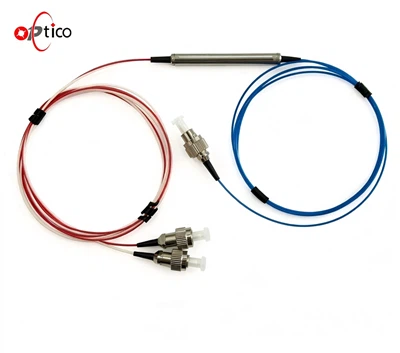
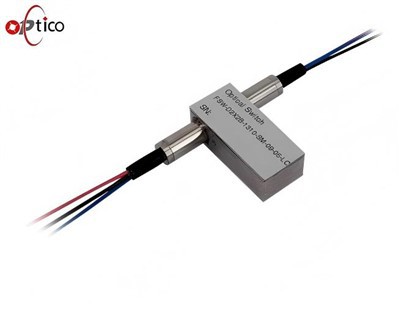


OPTICO designs and manufactures customized state of the art fiber optic sensor systems for the measurement of temperature, strain and other physical parameters. Our technology suits the requirement of measurements with; difficult environmental conditions, a high number of measurement points, few signal cables that may work over long distances, high measurement accuracy, and fast time response. Our advanced fiber optic platform, based on Fiber Bragg Grating (FBG) technology, can significantly enhance performance, productivity and digitalization in numerous industries through condition monitoring, process optimization and by connecting into process control. We always aim to deliver cutting-edge customized solutions to our customers. This is achieved by our unique ability to precisely tailor the FBG sensors and sensor packaging for every specific application.
Advantages of Fiber Sensing System


High sensitivity
Since light is an electromagnetic wave with a very short wavelength, its optical length is obtained by the phase of the light. Taking a fiber interferometer as an example, since the diameter of the fiber used is small, the optical length of the fiber is changed by a small mechanical external force or a temperature change, thereby causing a large phase change. Assuming a 10 m fiber, a change in l °C causes a phase change of 1000 ard.
Anti-electromagnetic interference, electrical insulation, corrosion resistance, intrinsic safety.
Because optical fiber sensors use optical waves to transmit information, and optical fibers are electrically insulated and corrosion-resistant transmission media, and are safe and reliable, which makes it easy and effective to use. Various large-scale electromechanical, petrochemical, mine and other strong electromagnetic interference and flammable and explosive environment.
Fast measurement speed
Light travels at the fastest speed and transmits two-dimensional information, so it can be used for high-speed measurements. The analysis of signals such as radar requires a very high detection rate, which is difficult to implement by electronic methods, and can be solved by high-speed spectrum analysis of the diffraction phenomenon of light.
Large information capacity
The signal to be measured is supported by light waves, and the frequency of the light is extremely high. The frequency band accommodated is wide, and the same fiber can transmit multiple signals.
Suitable for harsh environments
Optical fiber is a kind of dielectric material that is resistant to high voltage, corrosion and electromagnetic interference and can be used in harsh environments where other sensors are not suitable.
Types of Fiber Sensing System
Based on the sensor location, the fiber optic sensors are classified into two types
Intrinsic Type Fiber Optic Sensors: In this type of sensors, sensing takes place within the fiber itself. The sensors depend on the properties of the optical fiber itself to convert an environmental action into a modulation of the light beam passing through it. Here, one of the physical properties of light signal may be in the form of frequency, phase, polarization; intensity.
Extrinsic Type Fiber optic Sensors: In extrinsic type fiber optic sensors, the fiber may be used as information carriers that show the way to a black box. It generates a light signal depending on the information arrived at the black box. The black box may be made of mirrors,gas or any other mechanisms that generates an optical signal.
Based on operating principles, fiber optic sensors are classified into three types
Intensity based Fiber Optic Sensor: Intensity based fiber optic sensors require more light and these sensors use a multi-mode-large core fibers.The shown figure gives an idea about how the light intensity work as a sensing parameter as well as how this arrangement makes the fiber to work as a vibration sensor.
Polarization based Fiber Optic Sensor: Polarization based optical fibers are important for a certain class of sensors. This property can be simply modified by various external variables and thus, these types of sensors can be used for the measurement of a range of parameters. Special fibers and other components have been developed with exact polarization features.
Phase based Fiber Optic Sensor: These types of sensors are used to change emitter light on information signal wherein the signal is observed by the phase based fiber optic sensor. When a light beam is passed through the interferometer, then the light separates into two beams.Wherein one beam is exposed to the sensing environment and the other beam is isolated from the sensing environment, which is used as a reference.
Based on application, fiber optic sensors are classified into three types such as
Chemical Sensor: A chemical sensor is a device which is used to transform chemical information in the form of a measurable physical signal that is associated with the concentration of a certain chemical species.The Chemical sensor is an importantcomponent of an analyzerand may include some devices that perform the following functions: signal processing, sampling, and data processing.
Physical Sensor: A physical sensor is a device that is made according to the physical effect and nature. These sensors are used to provide the information about a physical property of the system. This type of sensors are mostly signified by sensors such as photoelectric sensors, piezoelectric sensors, metal resistance strain sensors and semiconductor piezo-resistive sensors.
Bio Medical Sensor: Biomedical sensor is an electronic device that is used to transfer various non- electrical quantities in biomedical fields into easily detectable electrical quantities. Due to this reason, these sensors are included in health care analysis. This sensing technology is the key to collecting human pathological and physiological information.
Application of Fiber Sensing System
Structural Health Monitoring
Fiber sensing systems are used for monitoring the structural integrity and health of buildings, bridges, dams, and other civil infrastructure. They can detect changes in strain, temperature, and vibrations, providing real-time data for assessing structural performance and detecting potential failures.
Industrial Process Monitoring
Fiber sensing systems are employed in industrial settings to monitor critical parameters such as temperature, pressure, and chemical composition. They enable precise and reliable measurements in harsh environments, contributing to process optimization, quality control, and equipment safety.
Oil and Gas Industry
We all know that the underground environment is very harsh, high temperature and high pressure, chemical corrosion and electromagnetic wave interference, because ordinary sensors are difficult to work underground, so it is natural to think of high-tech fiber optic sensors, which are not charged and small in size And it is anti-interference.
Aerospace and Aviation
Fiber sensing systems are utilized in the aerospace and aviation sectors for monitoring structural health, aircraft deformation, and temperature distribution. They help ensure the safety and reliability of aircraft components, contributing to improved maintenance practices and increased operational efficiency.
Environmental Monitoring
Fiber sensing systems find applications in environmental monitoring, including pollution detection, water quality monitoring, and climate studies. They can measure parameters such as pH, dissolved oxygen, temperature, and humidity, enabling accurate and real-time data collection for environmental analysis and management.
Applications in Medicine
Fiber sensing systems are widely used in medicine. This kind of optical fiber is relatively small in size, strong in anti-interference ability, and relatively good in affinity to organisms. Medical and biosensors have been applied in medicine now, including fiber optic radiation dosimeters and respiratory system airflow sensing systems.
Smart Structures and Iot
Fiber sensing systems are integrated into smart structures and Internet of Things (IoT) systems to enable real-time monitoring and data communication. They provide valuable insights into the structural behavior, energy efficiency, and environmental conditions, facilitating intelligent decision-making and predictive maintenance.
Robotics and Automation
Fiber sensing systems play a role in robotics and automation by providing feedback on position, proximity, and force. They enhance the precision and reliability of robotic systems, enabling safe and efficient operation in various industrial and manufacturing processes.
A fiber optic cable can act as the communication path between a test station and an external sensor, which is known as extrinsic sensing. However, when the fiber itself acts as the fiber optic sensing system, this is known as intrinsic fiber sensing.
The benefit of this type of fiber sensing technology is that discrete interfaces between the fiber and external sensors are not required, which reduces complexity and cost. In order to make this possible, external stimulation such as temperature, strain or vibrations (acoustic waves) need to influence the light guided within the cable in a measurable way to provide useful data.
When light photons are scattered randomly by the fiber material, this is known as Rayleigh scattering. This principle has proven useful with various types of fiber testing techniques such as OTDR fiber testing because the intensity, wavelength, and location of light backscattered to the detector can determine the magnitude and position of attenuation and reflection events within an optical fiber.
In a similar way, Raman scattering produces temperature-induced changes in photons scattered back to the source in the Stokes band. By measuring the difference between the intensity of backscattered light in the Stokes and anti-Stokes bands, the temperature can be accurately determined at any given location along the fiber.
Brillouin scattering is a similar phenomenon where the backscattered light wavelength is influenced by the external temperature and acoustic stimulation in a predictable way. This data, when coupled with background knowledge of temperature at the same point, can be used to accurately determine the strain experienced by the fiber and analyzed to determine what areas (zones) of the fiber are impacted.
Rayleigh coherent scattering can be used to detect vibrations and acoustic waves. The phase shift of the light is sensitive to vibrations and acoustic waves that the fiber optic cable experiences. By analyzing these phase shifts the location and intensity of the vibrations along the entire length of the fiber can be pinpointed.
The Future of Fiber Sensing Systems
Fiber optic sensors continue to fascinate. As in other areas of photonics, researchers are excited about the prospect of molding new technologies into the sensing and instrumentation context. Photonic crystals and photonic crystal fibers look interesting—although researchers have barely begun to figure out how to interpret these prospects into the somewhat orthogonal sensor-system environment. High-power lasers based on fiber optic technology enable especially innovative nonlinear characterization of materials. The fiber optic taper will no doubt re-emerge as a probe to examine structures on the microscopic, or even nanoscopic, scale.
Innovations in computing and the availability of extended data-handling capability will also help to improve our ability to interpret data from large arrays of similar sensors and lead to useful combinations of complementary sensors. There are also opportunities with optical micro-electromechanical systems, though these have yet to make their mark as fiber-based sensor technologies. Exploitation of fiber optic sensor technology will continue to expand, slowly but steadily. In parallel, the research community will keep investigating new tools and seeking out opportunities to apply them.
Noise sources and effects
Noise is any unwanted signal that affects the accuracy or reliability of a measurement. Noise can come from various sources, such as electromagnetic interference, optical crosstalk, environmental fluctuations, or mechanical vibrations. Noise can cause distortion, attenuation, or loss of signal in fiber sensing systems, depending on the type and intensity of the noise. Some noise sources can be reduced or eliminated by proper design, shielding, or isolation of the sensor system, while others may require more sophisticated signal processing techniques to filter out or compensate for the noise.
Immunity to electromagnetic interference
One of the main advantages of fiber sensing systems is their immunity to electromagnetic interference (EMI). EMI is the disturbance caused by electric or magnetic fields from other devices, such as power lines, radio waves, or electrical equipment. EMI can affect the performance or damage the components of conventional sensors, especially those that use metal wires or cables. fiber sensing systems, on the other hand, use light as the carrier of information, which is not affected by EMI. This makes fiber sensing systems ideal for applications where EMI is present or expected, such as aerospace, power generation, or biomedical engineering.
Optical crosstalk and multiplexing
Optical crosstalk is the unwanted transfer of optical power or signal between different channels or fibers in a fiber optic system. Optical crosstalk can cause interference, noise, or cross-sensitivity in fiber sensing systems, especially when multiple sensors are connected to the same fiber or source. Optical crosstalk can be minimized by using different wavelengths, polarization, or modulation schemes for each sensor, or by using optical isolators, filters, or switches to separate the signals. Multiplexing is the technique of combining multiple signals into one fiber or channel, which can increase the number of sensors that can be deployed in a system. Multiplexing can also reduce the cost, complexity, and size of the sensor system, but it may also increase the risk of optical crosstalk or signal degradation.
Environmental and mechanical factors
Environmental and mechanical factors can also affect the performance or durability of fiber sensing systems. For example, temperature changes can cause thermal expansion or contraction of the fiber or the sensor element, which can alter the optical properties or induce stress or strain in the sensor. Humidity, moisture, or corrosive substances can also damage the fiber or the sensor coating, which can lead to optical loss or degradation. Mechanical vibrations, shocks, or bends can also cause optical loss or distortion in the fiber or the sensor. Therefore, fiber sensing systems need to be designed and protected to withstand the environmental and mechanical conditions of their intended applications.
How Can Fiber Sensing System Prevent Damage and Avoid Repairs to Critical Infrastructure
Fiber sensing system technology offers a powerful solution for power utilities to enhance the monitoring and maintenance of their infrastructure. By utilizing optical fibers integrated within power cables, utilities can achieve real-time, continuous monitoring of key parameters, enabling proactive measures to prevent damage and avoid costly repairs.
Power lines are exposed to various environmental and operational stresses that can lead to overheating, mechanical strain, and potential failures. Fibers installed along the power lines can be used to monitor temperature, strain, and vibration in real-time. For instance, detecting hotspots can indicate areas where insulation may be degrading or where there is an overload condition. By identifying these issues early, utilities can schedule targeted maintenance before a minor problem escalates into a major failure, thus preventing power outages and reducing repair costs.
Another significant advantage of fiber optic sensing is its ability to precisely locate faults along power lines. Traditional fault detection methods can be slow and costly, often requiring extensive manual inspection using trucks, helicopters, or drones. Fiber optic sensing can quickly identify and locate faults caused by physical damage, environmental factors, or operational anomalies. This rapid fault location capability enables utility companies to respond swiftly, minimizing downtime and ensuring a more reliable power supply.
What Are the Most Effective Ways to Troubleshoot Fiber Sensing Systems
Problem Identification
The first step to troubleshoot fiber sensing systems is to identify the problem and its possible causes. Some common symptoms of faulty sensors are: Low or unstable signal, high noise level, inaccurate or inconsistent readings, or no signal at all. Some possible causes are: Fiber breakage, bending, or cracking, connector or splice loss, dirt or contamination, temperature or strain effects, electromagnetic interference, or sensor damage or degradation. To narrow down the problem, you should check the following aspects: The sensor type and configuration, the optical source and detector, the fiber condition and alignment, and the environmental factors.
Problem Solving
The next step to troubleshoot fiber sensing systems is to solve the problem or mitigate its impact. Depending on the problem and the sensor type, you may need to use different tools and methods, such as: Optical power meter, optical time domain reflectometer, optical spectrum analyzer, visual fault locator, cleaning kit, fiber inspection microscope, splice or connector repair kit, or sensor replacement. Some general tips to solve common problems are: Ensure proper fiber handling and storage, clean and inspect connectors and splices regularly, use appropriate optical sources and detectors for the sensor wavelength and bandwidth, shield the sensor from external interference, and calibrate the sensor periodically.
Problem Prevention
The final step to troubleshoot fiber sensing systems is to prevent the problem from recurring or worsening. This can be achieved by following some best practices and recommendations, such as: Design and install the sensor system according to the manufacturer's guidelines, use high-quality and compatible components and materials, test and verify the sensor performance before and after installation, monitor and record the sensor data and parameters, maintain and service the sensor system regularly, and update or upgrade the sensor system as needed.
International Certificates




Shenzhen OPTICO Communication Co., Ltd was established in April, 2008. Over the next 13 years, OPTICO expanded and increased its production because of the contracts with many EU Telecom Companies. OPTICO's main products fields including Indoor/Outdoor Fiber Cable, Data Center Fiber Patch cord, PLC Splitter, CWDM/DWDM/AWG/FWDM, SFP transceiver, and Media converter. All of products have passed CE, FCC, ROHS, ISO, ROHS certifications.
Ultimate FAQ Guide to Fiber Sensing System
We're professional fiber sensing system manufacturers and suppliers in China, specialized in providing high quality customized service. We warmly welcome you to buy high-grade fiber sensing system in stock here from our factory. Contact us for more details.
