

What are the differences in manufacturing processes between CCWDM and other WDMs?
In the ever - evolving field of optical communication, Wavelength Division Multiplexing (WDM) technology plays a crucial role in enabling high - capacity data transmission. Among various WDM types, Coarse - Channel Wavelength Division Multiplexing (CCWDM) stands out with its unique manufacturing processes, which differentiate it from other WDMs. As a CCWDM supplier, I am excited to delve into these differences and share insights into the manufacturing world of CCWDM and its counterparts.
Understanding WDM Technologies
Before we dive into the manufacturing differences, let's briefly understand the main types of WDM technologies. The two most common types are Dense Wavelength Division Multiplexing (DWDM) and Coarse Wavelength Division Multiplexing (CWDM), and our focus, CCWDM, which is a more advanced and compact form of CWDM.
DWDM is designed to accommodate a large number of closely - spaced wavelengths in the C - band (around 1530 - 1565 nm) or L - band (around 1565 - 1625 nm). It can support up to 80 or more channels with a channel spacing as narrow as 0.8 nm or even less. This high - density multiplexing allows for extremely high - capacity data transmission over long distances, making it suitable for backbone networks.
CWDM, on the other hand, has a wider channel spacing, typically 20 nm, and operates in the range of 1270 - 1610 nm. It can support up to 18 channels. CWDM is more cost - effective than DWDM and is often used in access networks and short - to medium - distance applications.
CCWDM is an optimized version of CWDM. It offers a more compact form factor and is designed to meet the increasing demand for high - density, cost - effective optical solutions in modern data centers and enterprise networks.
Manufacturing Processes of DWDM
The manufacturing process of DWDM components is highly complex and requires a high level of precision.
Filter Manufacturing
One of the key components in DWDM is the thin - film filter. These filters are fabricated using a process called Physical Vapor Deposition (PVD). In PVD, a thin layer of material, usually a dielectric material such as titanium dioxide or silicon dioxide, is deposited onto a substrate in a vacuum chamber. Multiple layers are deposited, each with a specific thickness and refractive index, to create a filter that can selectively transmit or reflect specific wavelengths. The deposition process is carefully controlled to achieve the desired optical properties, such as high - pass, low - pass, or band - pass characteristics.
Laser Source Manufacturing
DWDM systems rely on highly stable and accurate laser sources. Distributed Feedback (DFB) lasers are commonly used in DWDM. The manufacturing of DFB lasers involves epitaxial growth on a semiconductor substrate. Metal - Organic Chemical Vapor Deposition (MOCVD) is a widely used technique for this purpose. In MOCVD, metal - organic compounds and hydrides are introduced into a reaction chamber, where they react on the heated substrate to form the semiconductor layers of the laser. The process requires precise control of temperature, gas flow rates, and pressure to ensure the uniformity and quality of the laser structure.
Assembly and Testing
After the individual components are manufactured, they are assembled into a DWDM module. This involves precise alignment of the filters, lasers, and other optical components to ensure optimal performance. The assembled modules are then subjected to rigorous testing, including optical spectrum analysis, bit - error rate testing, and temperature cycling tests, to ensure they meet the strict performance requirements of DWDM systems.
Manufacturing Processes of CWDM
The manufacturing process of CWDM is relatively less complex compared to DWDM, mainly due to its wider channel spacing.
Filter Manufacturing
Similar to DWDM, CWDM also uses thin - film filters. However, the manufacturing process is less demanding in terms of precision. The PVD process is still used, but the number of layers and the accuracy of layer thickness control are not as critical as in DWDM. This allows for a more cost - effective manufacturing process.
Laser Source Manufacturing
CWDM systems can use Fabry - Perot (FP) lasers, which are less expensive and easier to manufacture than DFB lasers. FP lasers are fabricated using standard semiconductor manufacturing techniques, such as photolithography and etching. The manufacturing process is more straightforward and does not require the high - precision epitaxial growth process used in DFB lasers.

Assembly and Testing
The assembly of CWDM modules is also less complex. The components can be aligned with less precision, and the testing requirements are not as strict as those for DWDM. This results in lower manufacturing costs and shorter production times.
Manufacturing Processes of CCWDM
As a CCWDM supplier, I can attest to the unique manufacturing processes that set CCWDM apart from other WDMs.
Miniaturization Techniques
One of the main features of CCWDM is its compact form factor. To achieve this, advanced miniaturization techniques are used in the manufacturing process. For example, multi - chip module (MCM) technology is employed to integrate multiple optical components onto a single substrate. This reduces the overall size of the module and improves its reliability by minimizing the number of interconnections.
Advanced Filter Design
CCWDM uses advanced filter designs that are optimized for its specific channel spacing. These filters are designed to have a high rejection ratio for adjacent channels while maintaining a low insertion loss. The manufacturing process of these filters involves a combination of traditional PVD techniques and advanced simulation tools to ensure the best performance in a compact size.
Integration of Passive and Active Components
CCWDM modules often integrate both passive and active components, such as filters, lasers, and detectors. The manufacturing process requires careful consideration of the thermal management and electrical isolation of these components. Specialized packaging techniques are used to ensure that the components are protected from environmental factors and that the overall module operates efficiently.
Comparison of Manufacturing Costs
The manufacturing costs of DWDM, CWDM, and CCWDM vary significantly. DWDM has the highest manufacturing cost due to its high - precision components and complex manufacturing processes. The cost of thin - film filters, DFB lasers, and the rigorous testing requirements all contribute to the high price of DWDM modules.
CWDM has a lower manufacturing cost compared to DWDM. The use of less precise filters and less expensive laser sources, along with simpler assembly and testing processes, makes CWDM a more cost - effective option.
CCWDM strikes a balance between cost and performance. While it uses advanced miniaturization and filter design techniques, its manufacturing cost is still relatively lower than DWDM. The integration of multiple components in a compact form factor reduces the overall cost per channel, making it an attractive option for many applications.
Our CCWDM Products
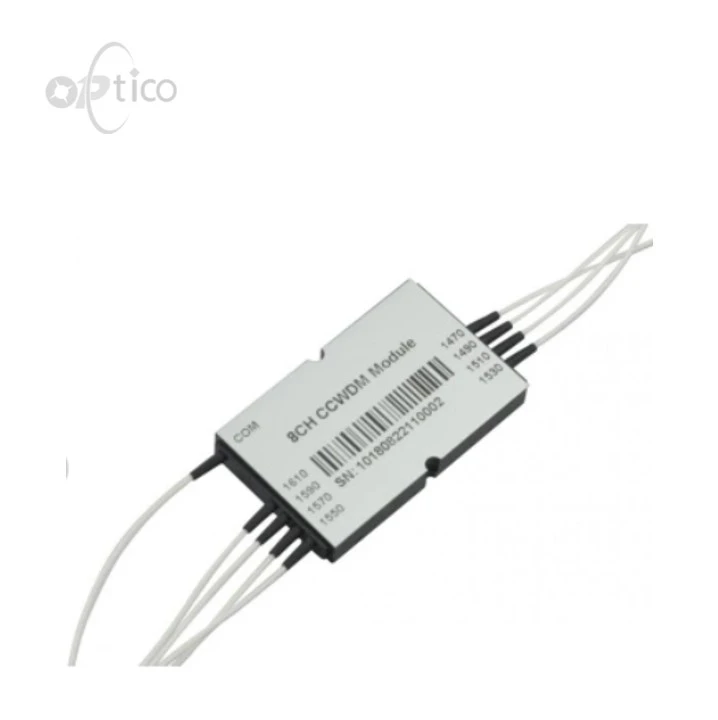
As a CCWDM supplier, we offer a range of high - quality CCWDM products. Our 8+1CH Compact CWDM is designed for applications that require a high - density solution with a compact footprint. It offers excellent performance and reliability, making it suitable for data centers and enterprise networks.
Our 4CH CCWDM Module is a cost - effective option for smaller - scale applications. It provides a simple and efficient way to multiplex and demultiplex four channels of optical signals.
For applications that require even more channels, we offer the 18CH Ultra Compact CWDM Module. This module is designed to maximize the number of channels in a minimal space, making it ideal for high - capacity networks.
Conclusion
In conclusion, the manufacturing processes of CCWDM, DWDM, and CWDM have significant differences, which are mainly driven by their different channel spacings, performance requirements, and application scenarios. DWDM is the most complex and expensive to manufacture, suitable for high - capacity, long - distance networks. CWDM is more cost - effective and is used in short - to medium - distance applications. CCWDM combines the advantages of both, offering a compact and cost - effective solution for modern data centers and enterprise networks.
If you are interested in our CCWDM products or have any questions about the manufacturing processes and applications of CCWDM, please feel free to contact us for procurement and further discussions. We are committed to providing you with the best optical solutions to meet your specific needs.
References
- Agrawal, G. P. (2002). Fiber - optic communication systems. John Wiley & Sons.
- Keiser, G. (2013). Optical fiber communications. McGraw - Hill Education.
- Senior, J. M., & Jamro, M. Y. (2009). Optical fiber communications: principles and practice. Pearson Education.