

What are the specifications of a 1x8 Mini PLC Splitter?
In the realm of fiber - optic communication, passive optical splitters play a crucial role in the distribution of optical signals. Among them, the 1x8 Mini PLC Splitter is a popular choice due to its compact size and high - performance capabilities. As a trusted supplier of 1x8 Mini PLC Splitters, I am delighted to share with you the detailed specifications of this remarkable device.
Physical Specifications
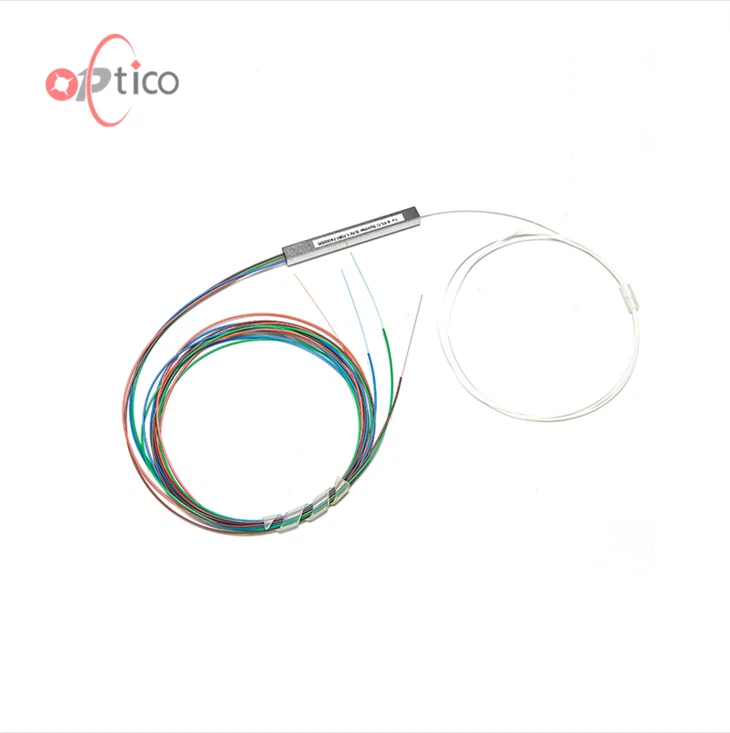
The 1x8 Mini PLC Splitter is designed with a focus on space - saving and easy installation. Its compact form factor makes it ideal for use in various environments, such as fiber - to - the - home (FTTH) networks, data centers, and telecommunications cabinets.
The overall dimensions of the splitter are typically quite small. For example, the length may range from around 60mm to 100mm, the width from 30mm to 50mm, and the height from 8mm to 15mm. This miniaturized design allows it to be easily integrated into tight spaces without taking up too much room.
The splitter is usually housed in a robust plastic or metal enclosure that provides protection against environmental factors like dust, moisture, and mechanical shock. The enclosure is designed to be durable, ensuring a long service life even in harsh conditions.
On the input side, it has a single fiber optic cable, which is the main input for the optical signal. The output side features eight fiber optic cables, each capable of carrying a portion of the split signal. The fiber optic cables used in the splitter are of high - quality, with a standard outer diameter of 0.9mm or 2.0mm, depending on the specific model. This ensures reliable signal transmission and easy handling during installation.

Optical Specifications
Insertion Loss
Insertion loss is one of the most important optical specifications of a PLC splitter. It refers to the amount of optical power lost when the signal passes through the splitter. For a 1x8 Mini PLC Splitter, the typical insertion loss is relatively low. In general, the insertion loss at a wavelength of 1310nm or 1550nm (common wavelengths in fiber - optic communication) is less than 10dB. This low insertion loss ensures that a significant portion of the optical power is transmitted to the output ports, resulting in a strong and reliable signal at the end - user's side.
Uniformity
Uniformity is another key optical parameter. It measures the variation in insertion loss among the eight output ports. A high - quality 1x8 Mini PLC Splitter has good uniformity, with the difference in insertion loss between the best - performing and the worst - performing output ports being less than 0.5dB. This means that each output port receives a relatively equal amount of optical power, which is essential for ensuring consistent performance across all connected devices.
Return Loss
Return loss is a measure of the amount of optical power that is reflected back towards the input due to impedance mismatches or other factors. For a 1x8 Mini PLC Splitter, the return loss is typically greater than 50dB at the input port and greater than 40dB at the output ports. A high return loss indicates that very little power is being reflected back, which helps to prevent signal degradation and interference.
Wavelength Range
The 1x8 Mini PLC Splitter is designed to operate over a wide wavelength range. It can typically handle wavelengths from 1260nm to 1650nm, covering the most commonly used wavelengths in fiber - optic communication systems, including the O - band (1260 - 1360nm), E - band (1360 - 1460nm), S - band (1460 - 1530nm), C - band (1530 - 1565nm), and L - band (1565 - 1625nm). This wide wavelength range makes it suitable for use in a variety of applications, from traditional telecommunication networks to emerging high - speed data transmission systems.
Electrical and Environmental Specifications
Operating Temperature
The 1x8 Mini PLC Splitter is designed to operate within a specific temperature range. Generally, it can operate reliably in temperatures ranging from - 40°C to + 85°C. This wide operating temperature range allows it to be used in different geographical locations and environmental conditions, from cold regions to hot and humid areas.
Storage Temperature
The storage temperature range is slightly wider than the operating temperature range. It can typically be stored in temperatures from - 40°C to + 85°C. This ensures that the splitter can be safely stored for extended periods without suffering any damage.
Humidity
The splitter can tolerate a relative humidity range of 5% to 95% (non - condensing). This means that it can function properly even in high - humidity environments, as long as there is no condensation on the splitter's surface.
Compatibility and Application
The 1x8 Mini PLC Splitter is highly compatible with various fiber - optic network components. It can be easily connected to other devices such as optical line terminals (OLTs), optical network units (ONUs), and other passive optical components.
In FTTH networks, the 1x8 Mini PLC Splitter is often used to split the optical signal from the central office to multiple end - users. For example, in a residential building, a single optical fiber from the OLT can be split into eight fibers using the 1x8 splitter, and each fiber can be connected to an ONU in a different apartment.
It is also widely used in data centers for distributing optical signals to different servers or network devices. In a data center environment, the compact size of the 1x8 Mini PLC Splitter allows for efficient use of rack space, while its high - performance optical specifications ensure reliable data transmission.
If you are interested in other types of PLC splitters, we also offer 1x4 Bare Fiber Type PLC Splitter, 1x12 Bare Fiber Type PLC Splitter, and 1x64 Bare Fiber Type PLC Splitter.
If you are in the market for high - quality 1x8 Mini PLC Splitters or have any questions about our products, please feel free to contact us for a detailed discussion and procurement negotiation. We are committed to providing you with the best products and services to meet your specific needs.
References
- "Fiber - Optic Communication Technology" by Gerd Keiser.
- Industry standards and specifications for passive optical splitters published by relevant international organizations.