

What is the difference between CCWDM and CWDM?
Hey there, fellow tech enthusiasts! Today, I'm gonna dive deep into the world of fiber - optic communication and talk about the difference between CCWDM and CWDM. As a CCWDM supplier, I've got a ton of hands - on experience with these two technologies, and I'm excited to share what I know.
Let's start with the basics. CWDM, or Coarse Wavelength Division Multiplexing, has been around for a while. It's a technology that allows multiple optical signals to be transmitted over a single fiber by using different wavelengths of light. Each signal is assigned a specific wavelength, and they can all travel together on the same fiber without interfering with one another. CWDM typically uses wavelengths in the 1270 - 1610 nm range, with a channel spacing of 20 nm. This relatively wide channel spacing makes it a cost - effective solution for many applications, especially in short - to medium - distance networks.
On the other hand, CCWDM, or Correlated Coarse Wavelength Division Multiplexing, is a more recent development. It's a variation of CWDM that offers some unique advantages. CCWDM uses a narrower channel spacing compared to traditional CWDM. While CWDM has a 20 nm channel spacing, CCWDM can have a channel spacing as narrow as 6.25 nm. This allows for more channels to be packed into the same wavelength range, increasing the overall capacity of the fiber - optic link.
One of the main differences between the two lies in their application scenarios. CWDM is great for simple, cost - sensitive networks. For example, in a small - to medium - sized enterprise network, where the distance between different locations is not too long, CWDM can provide a reliable and affordable way to increase the bandwidth. You can use products like the 18CH Ultra Compact CWDM Module to multiplex multiple signals onto a single fiber, reducing the need for laying additional fiber cables.
CCWDM, however, is more suitable for applications that require higher capacity and more flexibility. In data centers, where there is a huge demand for high - speed data transfer between servers and storage systems, CCWDM can be a game - changer. With its narrower channel spacing, it can support more channels, enabling more data to be transmitted simultaneously. Our 4CH CCWDM Module is a great option for such high - density applications.
Another difference is in the performance. CWDM is generally less precise in terms of wavelength accuracy. Since it has a wider channel spacing, there is more tolerance for wavelength drift. This means that the components used in CWDM systems don't need to be as precise, which helps keep the cost down. But this also means that the signal quality might not be as high as in a more precise system.
CCWDM, with its narrower channel spacing, requires more precise components. The lasers and filters used in CCWDM systems need to be more accurate to ensure that the signals at different wavelengths don't interfere with each other. This results in a higher - quality signal, but it also means that the components are more expensive. However, the increased capacity and performance often justify the higher cost in certain applications.
In terms of temperature sensitivity, CWDM is more tolerant of temperature changes. The wider channel spacing allows the system to operate over a broader temperature range without significant degradation in performance. This makes CWDM a good choice for outdoor or industrial environments where the temperature can vary widely.
CCWDM, on the other hand, is more sensitive to temperature. The narrow channel spacing means that even a small change in temperature can cause the wavelengths to shift, potentially leading to signal interference. To counter this, CCWDM systems often require temperature - controlled environments or additional compensation mechanisms, which can add to the complexity and cost of the system.
Let's also talk about the installation and maintenance. CWDM systems are relatively easy to install and maintain. The components are more standardized, and there are fewer requirements for precise alignment and calibration. This makes it a popular choice for network administrators who want a simple and hassle - free solution.
CCWDM systems, due to their higher precision requirements, can be more challenging to install and maintain. The installation process may require more specialized tools and skills, and regular calibration may be necessary to ensure optimal performance. But for the benefits it offers in terms of capacity and performance, it's often worth the extra effort.
Now, if you're looking at expanding your network capacity, you might be wondering which one is the right choice for you. Well, it really depends on your specific needs. If you're on a tight budget and your network doesn't require extremely high capacity, CWDM is probably the way to go. You can check out the 8+1CH Compact CWDM for a compact and cost - effective solution.
But if you need a high - performance, high - capacity network, especially in a data - intensive environment, then CCWDM is the better option. As a CCWDM supplier, I can offer you a range of high - quality CCWDM products that are designed to meet the most demanding requirements.
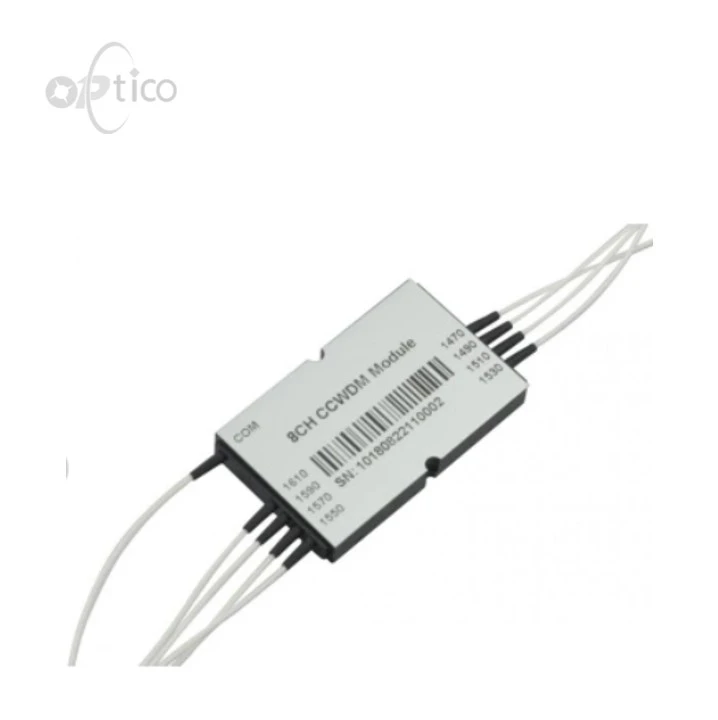

If you're interested in learning more about CCWDM or CWDM products, or if you want to discuss your specific network needs, don't hesitate to reach out. We're here to help you find the best solution for your network. Whether you're a small business looking to upgrade your network or a large data center in need of high - capacity solutions, we've got you covered.
In conclusion, both CWDM and CCWDM have their own strengths and weaknesses. Understanding the differences between them is crucial for making an informed decision when it comes to choosing the right technology for your network. So, take some time to evaluate your requirements, and if you need any advice, we're just a message away.
References
- Optical Fiber Communication Systems by Govind P. Agrawal
- Wavelength Division Multiplexing: Principles and Applications by Ivan Kaminow and Tingye Li