

What is the power consumption of a 1x6 Mini PLC Splitter?
As a supplier of 1x6 Mini PLC Splitters, I often get asked about the power consumption of these devices. In this blog post, I'll delve into the details of the power consumption of a 1x6 Mini PLC Splitter, exploring what factors influence it and why it matters in the context of modern fiber - optic networks.
Understanding PLC Splitters
Before we discuss power consumption, let's briefly understand what a 1x6 Mini PLC Splitter is. PLC (Planar Lightwave Circuit) splitters are passive optical devices used in fiber - optic networks to split an incoming optical signal into multiple output signals. A 1x6 Mini PLC Splitter takes one input fiber and divides the optical power among six output fibers. The "mini" in its name refers to its compact size, which is ideal for applications where space is limited, such as in fiber - to - the - home (FTTH) installations and small - scale data centers.
Power Consumption of 1x6 Mini PLC Splitters
One of the most significant advantages of 1x6 Mini PLC Splitters is that they are passive devices. Unlike active components like routers or switches that require electrical power to operate, passive devices do not have any internal power sources or active electronic circuits. As a result, the power consumption of a 1x6 Mini PLC Splitter is effectively zero.
This zero - power characteristic is extremely beneficial for several reasons. Firstly, it reduces the overall energy costs associated with running a fiber - optic network. In large - scale deployments, such as in a regional FTTH network with thousands of splitters, the cumulative energy savings can be substantial. Secondly, it simplifies the network infrastructure. There is no need to install power cables or power supplies for each splitter, which reduces the complexity of the installation and maintenance processes.
Factors Affecting the Perception of Power - Related Costs
Although the 1x6 Mini PLC Splitter itself consumes no power, there are some related factors that can be misconstrued as power - related costs.
Optical Loss and Amplification
When an optical signal passes through a PLC splitter, there is a certain amount of optical loss. The splitting ratio of the splitter determines this loss; for a 1x6 splitter, the theoretical loss due to splitting is approximately 7.8 dB. To compensate for this loss and ensure that the signal strength at the end - user's device is sufficient, optical amplifiers may be required at various points in the network. These amplifiers are active devices and consume electrical power. However, it's important to note that the power consumed by the amplifiers is not directly related to the splitter itself but rather to the need to maintain signal quality in the network.
Environmental Conditions
In some cases, environmental factors can indirectly affect the power requirements of the overall network. For example, in extremely hot or cold environments, the performance of optical components may degrade. To maintain optimal performance, temperature - control systems may be installed in the enclosures where the splitters are housed. These temperature - control systems consume electrical power, but again, this power consumption is not due to the splitter itself.
Comparison with Other PLC Splitters
Let's compare the 1x6 Mini PLC Splitter with other types of splitters in terms of power consumption. Since all PLC splitters are passive devices, they all share the characteristic of zero power consumption. However, different splitters have different splitting ratios, which can affect the overall network design and the need for optical amplification.
For instance, a 1x32 Mini PLC Splitter has a much higher splitting ratio than a 1x6 splitter. The theoretical optical loss for a 1x32 splitter is approximately 15 dB, which is significantly higher than the 7.8 dB loss of a 1x6 splitter. As a result, a 1x32 splitter may require more powerful or additional optical amplifiers in the network, leading to higher overall power consumption in the network to maintain signal strength.
On the other hand, a 2x2 Bare Fiber Type PLC Splitter has a lower splitting ratio, with a theoretical loss of around 3 dB. Networks using 2x2 splitters may require less optical amplification, resulting in lower overall power consumption for maintaining signal quality compared to networks with 1x6 or 1x32 splitters.
Applications and Power - Efficiency Benefits
The 1x6 Mini PLC Splitter's zero - power consumption makes it an ideal choice for a variety of applications.
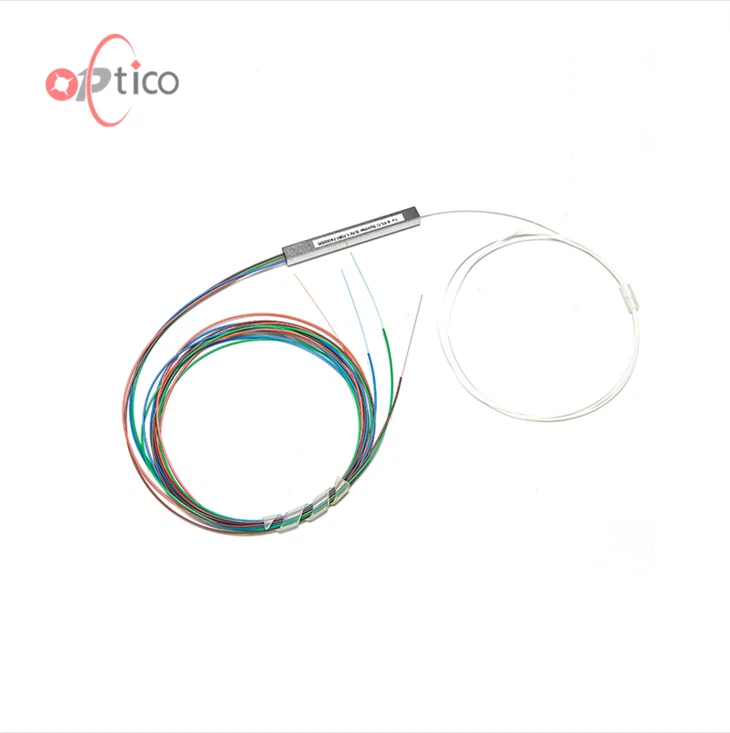

In FTTH networks, where cost - efficiency and space - saving are crucial, the 1x6 Mini PLC Splitter can be installed in small distribution boxes close to the end - users. Its compact size and zero power consumption mean that it can be easily integrated into the existing infrastructure without adding significant power - related costs or space requirements.
In small - to - medium - sized data centers, the 1x6 Mini PLC Splitter can be used to distribute optical signals between different servers and network devices. The lack of power consumption reduces the heat generated in the data center, which in turn can lower the cooling requirements and overall energy consumption.
Conclusion and Call to Action
In summary, the power consumption of a 1x6 Mini PLC Splitter is zero, thanks to its passive nature. This characteristic offers significant advantages in terms of energy savings, simplified network infrastructure, and overall cost - efficiency. Whether you are building a new fiber - optic network or upgrading an existing one, a 1x6 Mini PLC Splitter can be a reliable and energy - efficient choice.
If you're interested in purchasing 1x6 Mini PLC Splitters or other related products such as 1x12 Bare Fiber Type PLC Splitter, feel free to reach out to discuss your specific requirements and explore how our products can meet your needs in the most cost - effective way.
References
- "Fiber - Optic Communication Systems", G. P. Agrawal
- "Handbook of Passive Optical Components", Kai - Pong Ho, H. Y. Tam, and Derek Abbott