

What is the signal strength after splitting by a 1x4 Mini PLC Splitter?
Hey there! As a supplier of 1x4 Mini PLC Splitters, I often get asked about the signal strength after splitting. So, let's dive right into it and break down what you can expect.
First off, what exactly is a 1x4 Mini PLC Splitter? Well, it's a passive optical device that takes a single input optical signal and divides it into four output signals. These splitters are super handy in fiber - optic networks, especially in places like FTTx (Fiber to the x) deployments, where you need to distribute a single fiber signal to multiple users or endpoints.
Now, let's talk about signal strength. When an optical signal goes through a 1x4 Mini PLC Splitter, it's divided equally among the four output ports. But this division isn't free; there's a loss in signal strength, which is known as insertion loss. Insertion loss is measured in decibels (dB), and it's basically the reduction in the power of the optical signal as it passes through the splitter.
The typical insertion loss for a 1x4 Mini PLC Splitter is around 6 - 7 dB. This means that the signal strength at each of the four output ports is significantly lower than the input signal. To put it in perspective, if you start with an input signal of, say, 0 dBm (a common reference level for optical power), after passing through the 1x4 splitter, the signal at each output port will be around - 6 to - 7 dBm.
But why does this matter? Well, in a fiber - optic network, the signal needs to be strong enough to reach the end - user's device without getting too weak. If the signal strength is too low, it can lead to poor performance, such as slow data transfer speeds, dropped connections, or even complete signal loss. That's why it's crucial to understand the signal strength after splitting and plan your network accordingly.

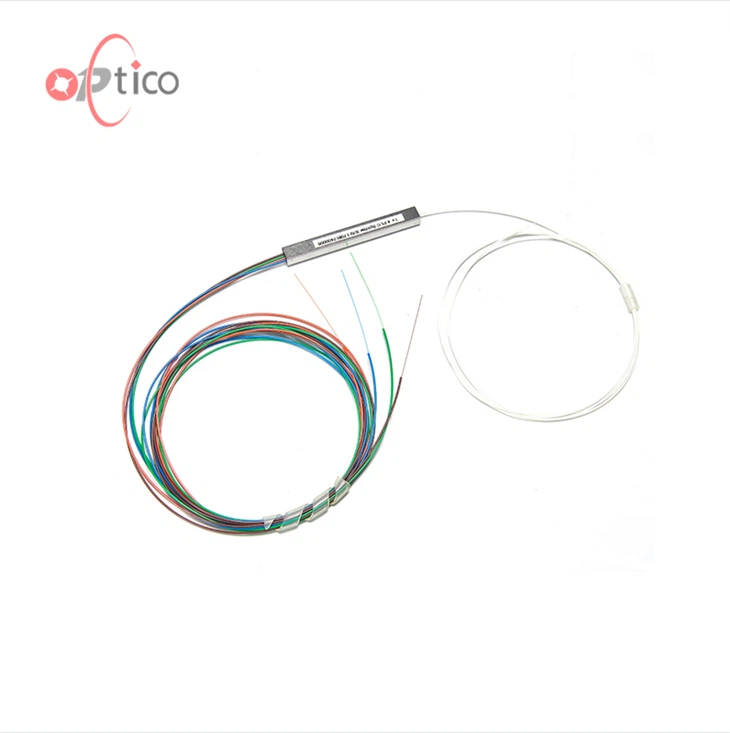
There are a few factors that can affect the actual insertion loss of a 1x4 Mini PLC Splitter. One of the main factors is the quality of the splitter itself. A high - quality splitter from a reliable supplier will have a more consistent and lower insertion loss compared to a cheap, low - quality one. At our company, we take great pride in manufacturing 1x4 Mini PLC Splitters with excellent insertion loss performance. We use high - quality materials and advanced manufacturing processes to ensure that our splitters provide reliable and consistent signal distribution.
Another factor that can impact the signal strength after splitting is the wavelength of the optical signal. Different wavelengths of light can experience different levels of insertion loss in the splitter. Most 1x4 Mini PLC Splitters are designed to work optimally at specific wavelengths, usually around 1310 nm or 1550 nm, which are the most commonly used wavelengths in fiber - optic networks.
Now, let's compare the 1x4 Mini PLC Splitter with other types of splitters. For example, the 1x128 Bare Fiber Type PLC Splitter. This splitter divides a single input signal into 128 output signals. Naturally, the insertion loss for a 1x128 splitter is much higher than that of a 1x4 splitter. The typical insertion loss for a 1x128 splitter can be around 21 - 23 dB. This means that the signal strength at each of the 128 output ports is much lower compared to a 1x4 splitter.
On the other hand, the 1x12 Bare Fiber Type PLC Splitter divides the signal into 12 output ports. Its insertion loss is typically around 10 - 11 dB, which is between that of a 1x4 and a 1x128 splitter. And then there's the 1x3 Mini PLC Splitter. This splitter divides the signal into three output ports, and its insertion loss is usually around 4 - 5 dB, which is lower than that of a 1x4 splitter.
So, when choosing a splitter for your network, you need to consider how many output ports you need and how much signal loss you can tolerate. If you only need to distribute the signal to a few users, a 1x4 or 1x3 splitter might be a good choice. But if you need to serve a large number of users, you might have to go for a 1x12 or 1x128 splitter, even though the insertion loss is higher.
To compensate for the insertion loss in a fiber - optic network, you can use optical amplifiers. These devices boost the signal strength, allowing it to travel further and maintain a sufficient level of power at the end - user's device. However, optical amplifiers add to the cost and complexity of the network, so it's important to balance the need for signal strength with the overall cost of the network.
In conclusion, understanding the signal strength after splitting by a 1x4 Mini PLC Splitter is crucial for designing and maintaining a reliable fiber - optic network. By knowing the typical insertion loss and the factors that can affect it, you can make informed decisions about which splitter to use and how to ensure that your network performs well.
If you're in the market for high - quality 1x4 Mini PLC Splitters or have any questions about signal strength and network design, don't hesitate to reach out. We're here to help you find the best solutions for your fiber - optic network needs. Whether you're a small - scale installer or a large - scale network provider, we can offer you the products and support you need.
References:
- "Fiber - Optic Communication Systems" by Govind P. Agrawal
- Industry whitepapers on PLC splitters from leading fiber - optic manufacturers