Breaking Down the Differences: Fiber Optic Cables vs Ethernet Cables
Introduction
In modern communication networks, optical fiber and Ethernet cables are two common types of cables used for transmitting data. While both serve the same purpose, there are many differences between the two in terms of their physical structure, performance, and use. This article delves into the primary differences between optical fiber and Ethernet cables.
Optical Fiber Cable
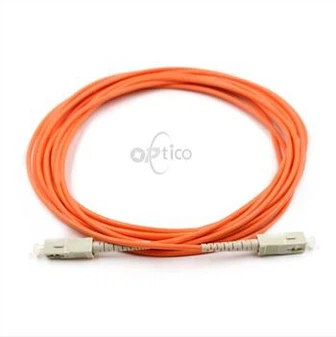
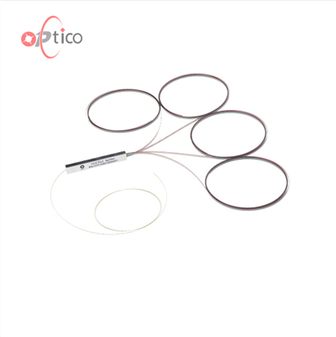
Optical fiber cable is a type of cable that transmits data using light rather than electrical signals, which makes it faster and more efficient. It is made up of a thin strand of glass or plastic fiber that is surrounded by a protective covering to prevent breakage or damage. The cable is designed to carry data over long distances, making it ideal for high-speed internet and telecommunications applications. Its use ranges from local area networks (LANs) to wide area networks (WANs) to global communication infrastructures.
Ethernet Cable
Ethernet cable is a type of cable that uses electrical signals to transmit data. It is composed of a bundle of wires enclosed in an insulated cover. Ethernet cable is the most common type of cable used for networking due to its cost-effectiveness and ease of use, and it is typically used in LANs.
Comparison of Optical Fiber Cable and Ethernet Cable
Optical fiber cables have many advantages, including faster data transfer speeds, greater transmission distances, and higher bandwidth capacity than Ethernet cables. It is also less susceptible to electromagnetic interference, which can lead to signal loss or degradation. Additionally, because optical fiber cables do not use electricity, they are immune to electrical interference and are less likely to cause fires. However, optical fiber is more expensive and difficult to install, making it less practical for small-scale applications.
Ethernet cables, on the other hand, are more affordable and easy to install, making them ideal for smaller-scale local networks. Ethernet cables can transfer data at speeds of up to 10 gigabits per second, which is adequate for most LAN applications. The downside of Ethernet cables is that they can only transmit data over shorter distances and are more susceptible to electromagnetic interference.
Choose the Proper Cable
Due to the differences discussed above, choosing the right cable depends on several factors. First, consider the size of the network and whether it is necessary to transmit data over long distances. For larger-scale networks or communication applications, fiber optic cables are ideal, while Ethernet cables are more appropriate for smaller-scale LANs. Also, consider the cost and ease of installation, as fiber optic cables are typically more expensive and difficult to install.