

What are the network management requirements for CCWDM systems?
Hey there! As a CCWDM (Coarse Coarse Wavelength Division Multiplexing) supplier, I've been getting a lot of questions lately about the network management requirements for CCWDM systems. So, I thought I'd take a few minutes to break it down for you.
First off, let's understand what a CCWDM system is. CCWDM is a technology that allows multiple optical signals of different wavelengths to travel over a single fiber optic cable. This significantly increases the capacity of the network without the need to lay additional fibers, which can be costly and time - consuming.
1. Monitoring Requirements
One of the key network management requirements for CCWDM systems is monitoring. You need to keep an eye on several parameters to ensure the system is running smoothly.
Optical Power Monitoring
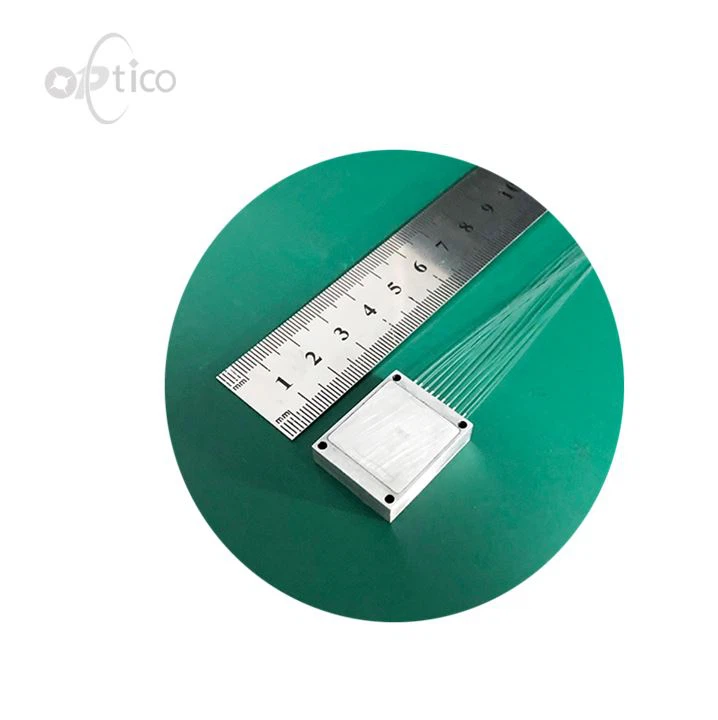
Optical power is crucial. If the power of a particular wavelength is too high or too low, it can lead to signal degradation or even complete signal loss. With multiple wavelengths multiplexed on a single fiber, each channel needs to be monitored independently. For instance, our 8+1CH Compact CWDM has advanced optical power monitoring capabilities. The monitoring system can detect any sudden changes in power, and if there's a deviation from the normal range, it can send out an alert. This helps network administrators to quickly identify and address potential issues before they cause significant disruptions.
Wavelength Stability Monitoring
Another important aspect is the stability of the wavelengths. Over time, factors like temperature changes, aging of components, and environmental vibration can cause the wavelengths to drift. If the wavelengths drift outside their assigned ranges, it can lead to cross - talk between channels. In our 18CH Ultra Compact CWDM Module, we've built in advanced wavelength monitoring features. These features continuously measure the actual wavelengths of each channel and compare them to the nominal values. If the difference exceeds a certain threshold, it can trigger an alarm, allowing for timely corrective actions.
2. Configuration Management
Proper configuration management is essential for CCWDM systems.
Channel Assignment
You need to assign the right wavelengths to the right channels based on your network requirements. For example, if you have a particular application that requires a high - bandwidth connection, you might want to assign a dedicated wavelength to it. Our 4CH CCWDM Module offers flexible channel assignment options. Network administrators can easily configure which wavelengths are used for each of the four channels through a user - friendly interface.
Mux/Demux Configuration
The multiplexer and demultiplexer (mux/demux) settings also play a crucial role. These components are responsible for combining and separating the wavelengths at the sending and receiving ends respectively. Incorrect mux/demux configuration can lead to signal loss or misrouting. The management system should allow for easy configuration and re - configuration of these settings, especially when there are changes in the network topology or the traffic patterns.
3. Fault Management
When something goes wrong in a CCWDM system, the network management system should be able to quickly detect, isolate, and resolve the fault.
Fault Detection
Fault detection is the first step. This involves constantly checking the system for any signs of malfunction, such as a sudden drop in optical power, a wavelength drift, or a loss of signal. Advanced algorithms can be used to analyze the data from the monitoring sensors and identify potential faults. For example, if the optical power of a specific channel drops below a certain level and does not recover within a short period, the system can flag it as a potential fault.
Fault Isolation
Once a fault is detected, the system needs to be able to isolate it to a specific component or a section of the network. This is important because it allows the network administrators to focus their efforts on fixing the actual problem. For example, if there's a problem with a particular wavelength, the system should be able to determine whether it's an issue with the transmitter, the fiber, or the receiver for that wavelength.
Fault Resolution
After isolating the fault, the next step is to resolve it. This might involve replacing a faulty component, adjusting the configuration settings, or performing some maintenance on the fiber. The network management system should provide clear instructions and guidance to the administrators to help them resolve the issue as quickly as possible.
4. Performance Management
Measuring and analyzing the performance of the CCWDM system is another important network management requirement.
Bandwidth Utilization
You need to know how much of the available bandwidth is being used by each channel and the system as a whole. This helps in capacity planning and resource allocation. For example, if a particular channel is consistently running at high utilization, it might be necessary to allocate additional bandwidth to it or optimize the traffic on that channel.
Signal Quality
The quality of the signals carried by the CCWDM system is also a critical performance metric. Parameters such as bit error rate (BER) can be used to measure the signal quality. A high BER indicates that there are errors in the transmission, which can lead to data loss and reduced network performance. Monitoring the BER allows for early detection of problems and implementation of corrective measures.
5. Security Management
In today's digital age, security is of utmost importance for any network system, including CCWDM.
Access Control
The network management system should have strict access control measures in place. Only authorized personnel should be able to access and modify the configuration settings of the CCWDM system. This can be achieved through the use of passwords, user roles, and authentication mechanisms.
Data Encryption
When sensitive data is being transmitted over the CCWDM system, it should be encrypted to protect it from unauthorized access. Encryption algorithms can be used to scramble the data at the source and unscramble it at the destination. This ensures that even if the data is intercepted during transmission, it cannot be read by unauthorized parties.
Wrapping Up and Reaching Out
In conclusion, network management for CCWDM systems involves a wide range of requirements, from monitoring and configuration to fault and performance management, as well as security. At our company, we understand these challenges and have designed our CCWDM products, such as the 8+1CH Compact CWDM, 18CH Ultra Compact CWDM Module, and 4CH CCWDM Module, to meet these needs effectively.
If you're interested in learning more about our CCWDM solutions or have any questions regarding the network management requirements for your specific CCWDM system, we'd love to hear from you. Reach out to us for a detailed discussion and let's work together to build a robust and efficient network.

References
- Optical Communication Technology Handbook
- Wavelength Division Multiplexing: Fundamentals and Applications