

What is the optical power budget of a DWDM Mux Demux?
What is the optical power budget of a DWDM Mux Demux?
As a supplier of DWDM Mux Demux products, I often get asked about the optical power budget of these crucial components in optical communication systems. In this blog post, I'll delve into the concept of optical power budget for DWDM Mux Demux, its significance, and how it impacts the overall performance of the system.
Understanding DWDM Mux Demux
Before we jump into the optical power budget, let's briefly understand what DWDM Mux Demux is. Dense Wavelength Division Multiplexing (DWDM) is a technology that allows multiple optical signals of different wavelengths to be combined (multiplexed) onto a single optical fiber for transmission and then separated (demultiplexed) at the receiving end. A DWDM Mux Demux device is responsible for performing these multiplexing and demultiplexing operations.
DWDM systems are widely used in high - capacity long - haul and metropolitan area networks because they can significantly increase the transmission capacity of optical fibers. Our company offers a variety of DWDM Mux Demux products, such as the 8CH DWDM Module, 4CH DWDM LGX Module, and 200G 20CH DWDM, which are designed to meet different network requirements.
What is Optical Power Budget?
The optical power budget is a crucial parameter in optical communication systems. It refers to the difference between the optical power launched into the fiber at the transmitter and the minimum optical power required at the receiver to achieve a specified bit - error rate (BER). In other words, it represents the amount of optical power loss that the system can tolerate while still maintaining reliable communication.
Mathematically, the optical power budget (PB) can be expressed as:
PB = PT - PR
where PT is the transmitted optical power and PR is the received optical power.
Components Affecting the Optical Power Budget of DWDM Mux Demux
Several factors contribute to the power loss in a DWDM Mux Demux system, and understanding these factors is essential for calculating the optical power budget accurately.
Insertion Loss
Insertion loss is one of the most significant factors affecting the optical power budget. It is the loss of optical power that occurs when a signal passes through the DWDM Mux Demux device. Insertion loss is mainly caused by factors such as the absorption and scattering of light within the device, as well as the coupling losses between the input and output fibers.
The insertion loss of a DWDM Mux Demux device is typically specified in decibels (dB) for each wavelength channel. For example, a well - designed DWDM Mux Demux may have an insertion loss of around 0.5 - 2 dB per channel. The total insertion loss of the system depends on the number of channels and the insertion loss per channel.
Channel Imbalance
Channel imbalance refers to the difference in insertion loss between different wavelength channels in a DWDM Mux Demux device. In an ideal system, all channels would have the same insertion loss. However, in reality, there are always some variations due to manufacturing tolerances and the characteristics of the optical components used.
Channel imbalance can cause problems in the system, such as unequal signal strengths at the receiver, which may lead to a higher bit - error rate. Therefore, it is important to keep the channel imbalance within an acceptable range. Our DWDM Mux Demux products are carefully engineered to minimize channel imbalance and ensure consistent performance across all channels.
Polarization - Dependent Loss (PDL)
Polarization - Dependent Loss is the difference in insertion loss for two orthogonal polarization states of the input light. It occurs because the optical properties of the components in the DWDM Mux Demux device can vary depending on the polarization of the light.
PDL can cause fluctuations in the received optical power and degrade the performance of the system, especially in high - speed and long - haul applications. To reduce the impact of PDL, our products are designed with advanced polarization - insensitive technologies.
Other Losses
In addition to the above factors, there are other losses in the system, such as the loss in the optical fibers, connectors, and splices. These losses should also be taken into account when calculating the optical power budget.
Calculating the Optical Power Budget
To calculate the optical power budget of a DWDM Mux Demux system, we need to consider all the factors mentioned above. Here is a step - by - step guide on how to calculate the optical power budget:
- Determine the transmitted optical power (PT): This is the optical power launched into the fiber by the transmitter. It is usually specified by the manufacturer of the optical transmitter.
- Calculate the total insertion loss of the DWDM Mux Demux: Multiply the insertion loss per channel by the number of channels and add any additional losses due to channel imbalance and PDL.
- Estimate the losses in the optical fibers, connectors, and splices: These losses can be estimated based on the length of the fibers, the type of connectors and splices used, and the attenuation characteristics of the fibers.
- Determine the minimum received optical power (PR): This is the minimum optical power required at the receiver to achieve a specified bit - error rate. It is typically specified by the manufacturer of the optical receiver.
- Calculate the optical power budget (PB): Subtract the total losses (insertion loss of DWDM Mux Demux + fiber losses + connector and splice losses) from the transmitted optical power (PT) and compare it with the minimum received optical power (PR).
If the calculated optical power budget is greater than or equal to the difference between the transmitted and minimum received optical power, the system is likely to operate reliably. Otherwise, additional optical amplifiers or other measures may be required to boost the optical power.
Importance of Optical Power Budget in DWDM Mux Demux Systems
The optical power budget is of utmost importance in DWDM Mux Demux systems for several reasons:
System Reliability
A proper optical power budget ensures that the received optical power at the receiver is sufficient to achieve a low bit - error rate. If the power budget is not calculated correctly, the received optical power may be too low, resulting in a high bit - error rate and unreliable communication.
Network Planning
Accurate calculation of the optical power budget is essential for network planning. It helps in determining the maximum distance that the optical signals can travel, the number of repeaters or amplifiers required, and the overall cost of the network.
Compatibility
The optical power budget also affects the compatibility of different components in the system. For example, if the power budget is not sufficient, the DWDM Mux Demux device may not work properly with the optical transmitters and receivers.
Conclusion
In conclusion, the optical power budget is a critical parameter in DWDM Mux Demux systems. It is affected by various factors such as insertion loss, channel imbalance, polarization - dependent loss, and fiber losses. Accurate calculation of the optical power budget is essential for ensuring the reliability, performance, and cost - effectiveness of the system.

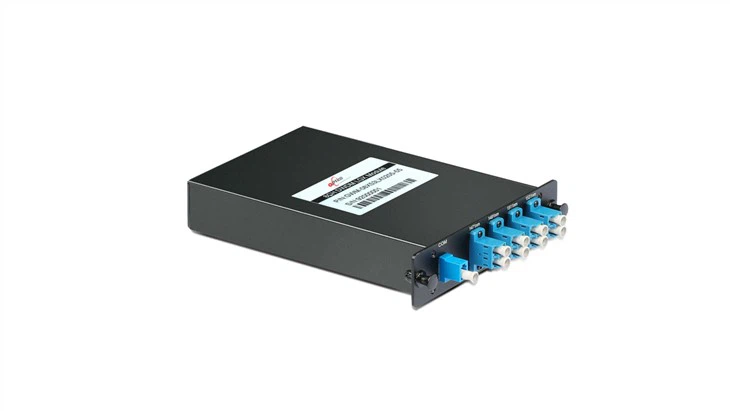
As a leading supplier of DWDM Mux Demux products, we are committed to providing high - quality products with low insertion loss, low channel imbalance, and low polarization - dependent loss. Our products are designed to meet the strict requirements of modern optical communication networks.
If you are interested in our DWDM Mux Demux products or need more information about optical power budget calculations, please feel free to contact us for procurement and further discussions. We look forward to working with you to build reliable and high - performance optical communication networks.
References
- "Optical Fiber Communication Systems" by Gerd Keiser.
- Technical specifications of DWDM Mux Demux products from industry manufacturers.